Install
openclaw skills install @hith3sh/kibana-observabilityManage Elastic Kibana for observability and security operations. Query data views, manage alerting rules and detection engine rules, handle Fleet agent policies, manage cases, and interact with the Elastic Security solution.
openclaw skills install @hith3sh/kibana-observability
Manage Elastic Kibana for observability, security, and infrastructure monitoring. Query data views, manage alerting rules, handle detection engine rules, manage Fleet agent policies, and work with cases and security alerts.
This skill uses ClawLink for hosted connection flows and credentials so you do not need to configure Kibana API access yourself.
| Step 1: Install | Step 2: Pair Account | Step 3: Connect Kibana |
|---|---|---|
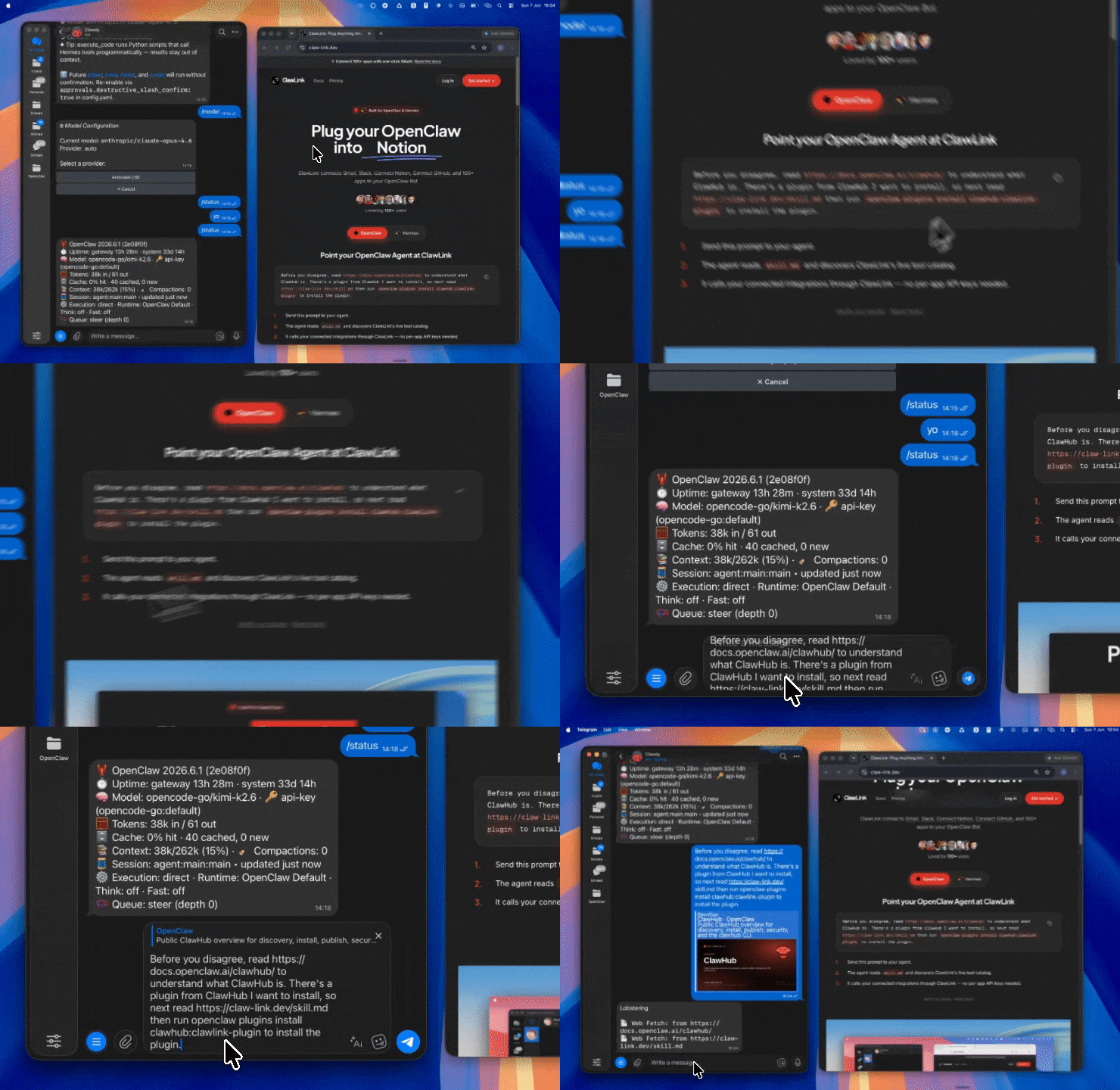 | 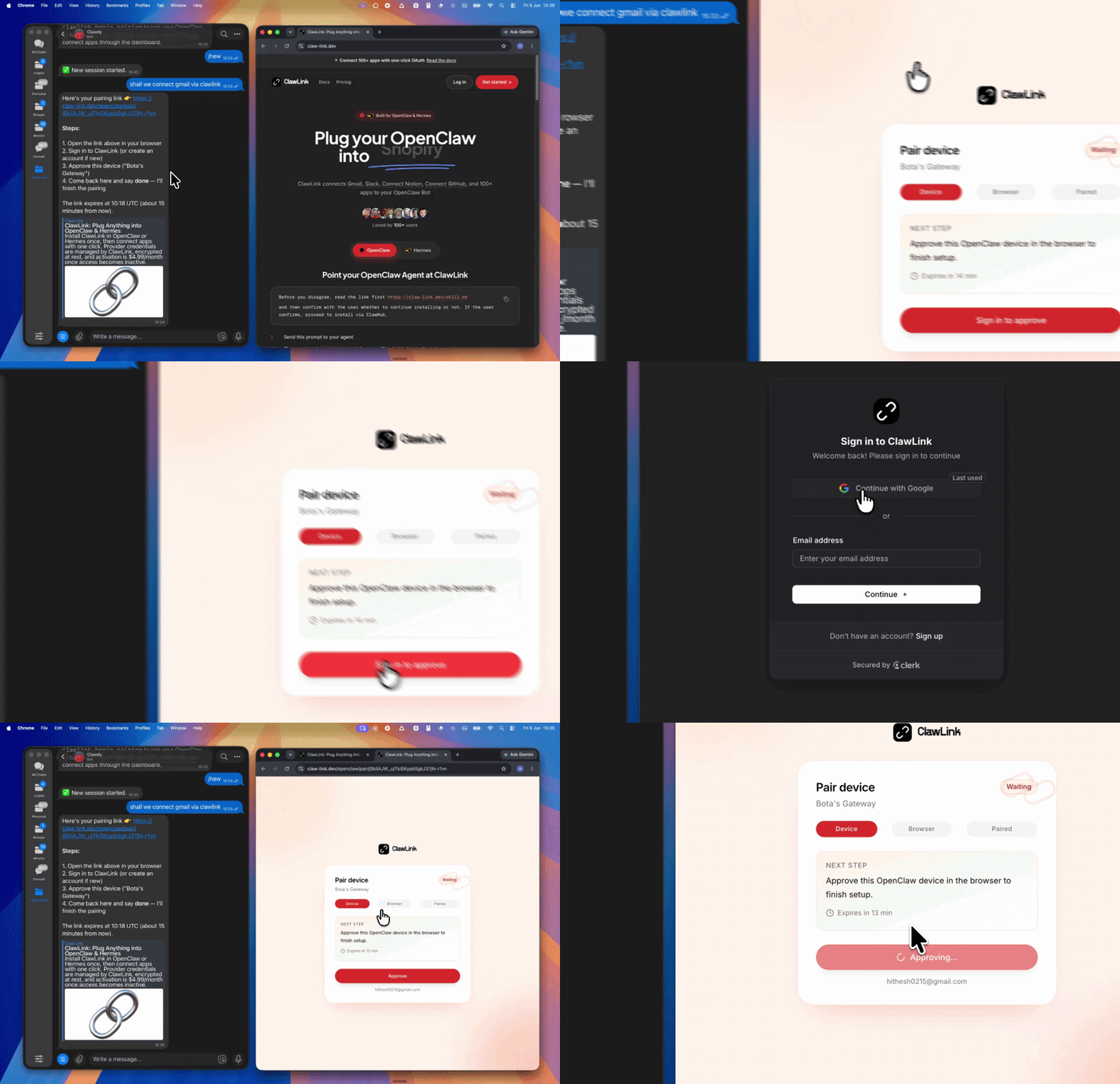 | App-specific connection GIF coming soon |
┌─────────────────┐     ┌──────────────┐     ┌──────────────────┐
│   OpenClaw      │────▶│   ClawLink   │────▶│  Kibana REST API │
│   (User Chat)   │     │   (OAuth)    │     │   (v8.x)        │
└─────────────────┘     └──────────────┘     └──────────────────┘
         │                       │                       │
         │  1. Install Plugin  │                       │
         │  2. Pair Device   │                       │
         │  3. Connect Kibana │                      │
         │                   │  4. Secure Token      │
         │                   │  5. Proxy Requests    │
         │                   │                       │
         ▼                   ▼                       ▼
   ┌──────────┐      ┌──────────┐           ┌──────────┐
   │  SKILL   │      │ Dashboard│           │  Kibana  │
   │  File    │      │ Auth     │           │ Stack   │
   └──────────┘      └──────────┘           └──────────┘
Install the verified ClawLink plugin from ClawHub. After the user confirms, complete the full setup so ClawLink tools are visible in the next OpenClaw chat.
openclaw plugins install clawhub:clawlink-plugin
openclaw config set tools.alsoAllow '["clawlink-plugin"]' --strict-json
openclaw gateway restart
Then tell the user: "OpenClaw has been restarted. Send /new as a standalone message to start a fresh chat, then ask for Kibana again."
# List data views
clawlink_call_tool --tool "kibana_get_data_views" --params '{}'

# Get alert types
clawlink_call_tool --tool "kibana_get_alert_types" --params '{}'

# List cases
clawlink_call_tool --tool "kibana_get_cases" --params '{}'
All Kibana tool calls are authenticated automatically by ClawLink using the user's connected Kibana instance.
No API key is required in chat. ClawLink stores the OAuth token securely and injects it into every Kibana API request on the user's behalf.
clawlink_begin_pairing if it is not configured yet.clawlink_list_integrations to verify the connection is active.clawlink_list_integrations
Response: Returns all connected integrations. Look for kibana in the list.
clawlink_list_tools --integration kibana
Response: Returns the live tool catalog for Kibana.
If Kibana tools are missing or the connection shows an error:
clawlink_list_integrations to verifyclawlink_list_tools --integration kibana| Tool | Description | Mode |
|---|---|---|
kibana_get_data_views | List all data views (index patterns) available in Kibana | Read |
| Tool | Description | Mode |
|---|---|---|
kibana_get_alert_types | Get available rule types with license requirements and configuration options | Read |
kibana_get_alerting_rules | List alerting rules with pagination and filtering | Read |
kibana_delete_alerting_rules | Delete an alerting rule by ID | Write |
| Tool | Description | Mode |
|---|---|---|
kibana_get_action_types | Get available connector types (Slack, Email, Webhook, ServiceNow, etc.) | Read |
kibana_get_connectors | List all configured connectors | Read |
kibana_delete_connectors | Delete a connector by ID | Write |
| Tool | Description | Mode |
|---|---|---|
kibana_get_cases | List cases with optional filtering by status, assignee, or severity | Read |
| Tool | Description | Mode |
|---|---|---|
kibana_delete_saved_objects | Delete a saved object (visualization or dashboard) by ID | Write |
| Tool | Description | Mode |
|---|---|---|
kibana_get_detection_engine_rules_find | List detection engine rules with KQL filtering and sorting | Read |
| Tool | Description | Mode |
|---|---|---|
kibana_find_alerts | Find and aggregate detection alerts with optional query filtering | Read |
| Tool | Description | Mode |
|---|---|---|
kibana_get_endpoint_list_items | List Elastic Endpoint exception list items with filtering | Read |
| Tool | Description | Mode |
|---|---|---|
kibana_get_entity_store_engines | Get entity store engine configurations and status | Read |
kibana_get_entity_store_entities_list | List entity records (users, hosts, services) with paging and filtering | Read |
kibana_get_entity_store_status | Get Entity Store status and configured engines | Read |
| Tool | Description | Mode |
|---|---|---|
kibana_get_fleet_agent_policies | List Fleet agent policies with filtering and enrollment counts | Read |
kibana_get_fleet_agents_available_versions | Get available Elastic Agent versions | Read |
kibana_get_fleet_agents_setup_status | Check Fleet setup readiness and missing requirements | Read |
kibana_get_fleet_check_permissions | Verify user permissions for Fleet API operations | Read |
kibana_get_fleet_enrollment_api_keys | List enrollment API keys for agent authentication | Read |
kibana_get_fleet_enrollment_api_key | Get details of a specific enrollment API key by ID | Read |
kibana_delete_fleet_output | Delete a Fleet output configuration by ID | Write |
kibana_delete_fleet_proxy | Delete a Fleet proxy configuration by ID | Write |
| Tool | Description | Mode |
|---|---|---|
kibana_get_fleet_epm_categories | Get available package categories with counts | Read |
kibana_get_fleet_epm_packages | List available Fleet integration packages | Read |
kibana_get_fleet_epm_packages_installed | List installed Fleet packages | Read |
kibana_get_fleet_epm_package_details | Get detailed package information including data streams and assets | Read |
kibana_get_fleet_epm_package_stats | Get usage statistics for a specific Fleet package | Read |
kibana_get_fleet_epm_package_file | Get a specific file from an EPM package (manifest, README, changelog) | Read |
kibana_get_fleet_epm_data_streams | List available data streams with filtering | Read |
| Tool | Description | Mode |
|---|---|---|
kibana_delete_list | Delete a list by ID | Write |
| Tool | Description | Mode |
|---|---|---|
kibana_delete_osquery_saved_queries | Delete an Osquery saved query by saved object ID | Write |
clawlink_call_tool --tool "kibana_get_data_views" \
  --params '{}'
clawlink_call_tool --tool "kibana_get_alert_types" \
  --params '{}'
clawlink_call_tool --tool "kibana_get_cases" \
  --params '{}'
clawlink_call_tool --tool "kibana_get_detection_engine_rules_find" \
  --params '{"page": 1, "per_page": 25}'
clawlink_call_tool --tool "kibana_get_fleet_agent_policies" \
  --params '{}'
clawlink_list_integrations to confirm Kibana is connected.clawlink_list_tools --integration kibana to see the live catalog.clawlink_search_tools with a short query and integration kibana.┌─────────────────────────────────────────────────────────────┐
│ READ OPERATIONS (Safe) │
│ list → get → search → describe → call │
│ │
│ Example: List data views → Get index fields → Query data │
└─────────────────────────────────────────────────────────────┘
│
▼
┌─────────────────────────────────────────────────────────────┐
│ WRITE OPERATIONS (Require Confirmation) │
│ list → get → describe → preview → confirm → call │
│ │
│ Example: Preview rule delete → User approves → Execute │
└─────────────────────────────────────────────────────────────┘
clawlink_describe_tool first.whenToUse, askBefore, safeDefaults, examples, and followups to shape the call.clawlink_preview_tool first.clawlink_call_tool. Pass confirmation only after the preview matches the user's intent.| Status / Error | Meaning |
|---|---|
| Tool not found | The tool name does not exist in the current catalog. Verify with clawlink_list_tools --integration kibana. |
| Missing connection | Kibana is not connected. Direct the user to https://claw-link.dev/dashboard?add=kibana. |
| Permission error | The authenticated user lacks permission for this operation. Check Kibana roles. |
| Fleet not ready | Fleet is not properly configured. Check setup status first. |
| Write rejected | User did not confirm a write action. Always confirm before executing writes. |
openclaw plugins list
/new as a standalone message to reload the catalog.openclaw config set tools.alsoAllow '["clawlink-plugin"]' --strict-json
openclaw gateway restart
/new again and retry.clawlink_call_tool --tool "kibana_get_fleet_agents_setup_status" --params '{}'
Powered by ClawLink — an integration hub for OpenClaw