Install
openclaw skills install @hith3sh/google-calendar-schedulingCheck Google Calendar calendars, find free time, schedule meetings, and update events via the Google Calendar API. Use this skill when users want help scheduling or updating meetings — list calendars, show event details for a day or range, find free time slots, search for events, create events from structured details, adjust or delete existing events after confirmation, and check current date/time for timezone-aware scheduling.
openclaw skills install @hith3sh/google-calendar-scheduling
Access Google Calendar via the Google Calendar API with OAuth authentication. Check calendars, find free time, schedule meetings, and update events.
This skill uses ClawLink for hosted connection flows and credentials so you do not need to configure Google Calendar API access yourself.
| Step 1: Install | Step 2: Pair Account | Step 3: Connect Google Calendar |
|---|---|---|
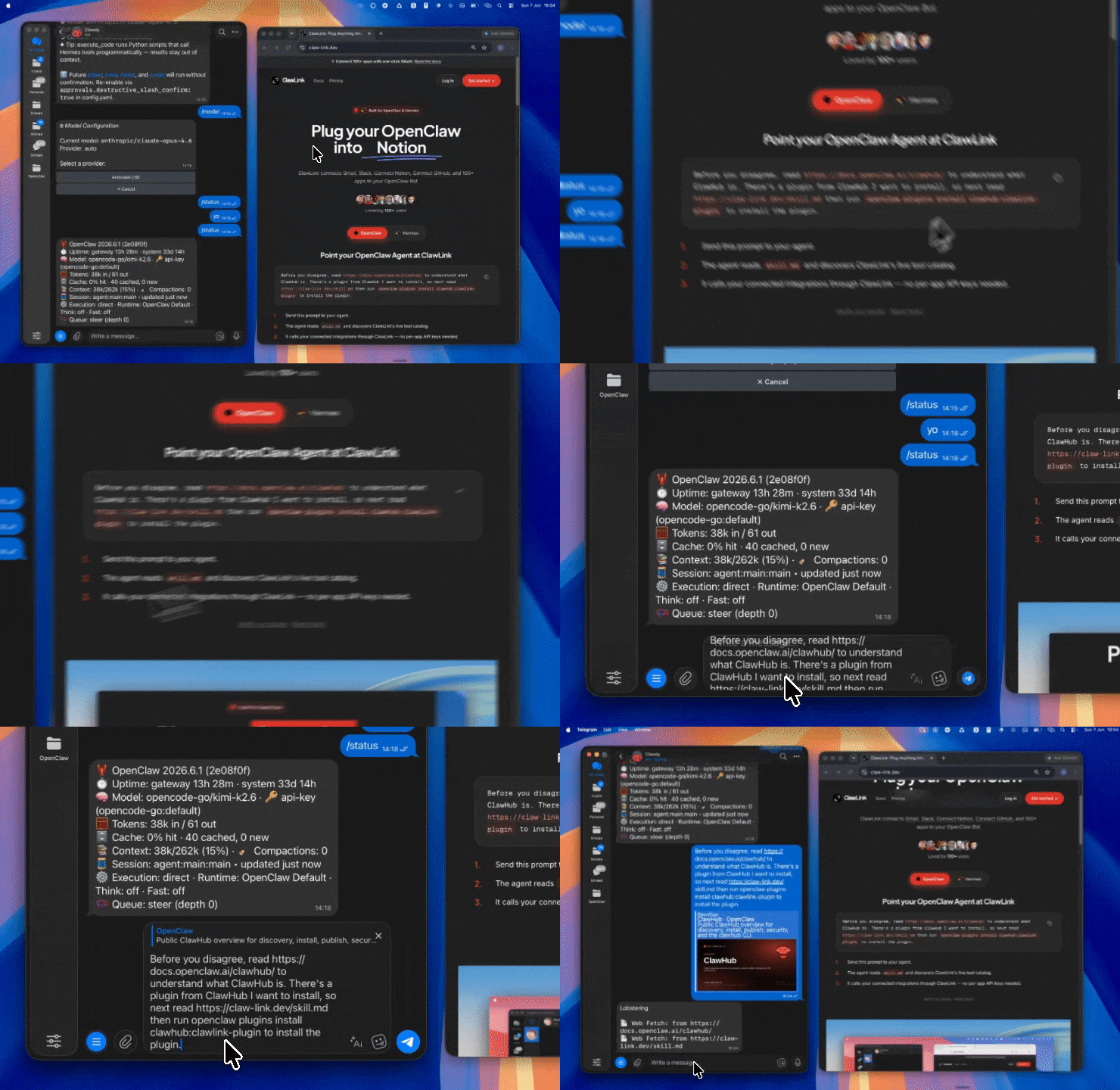 | 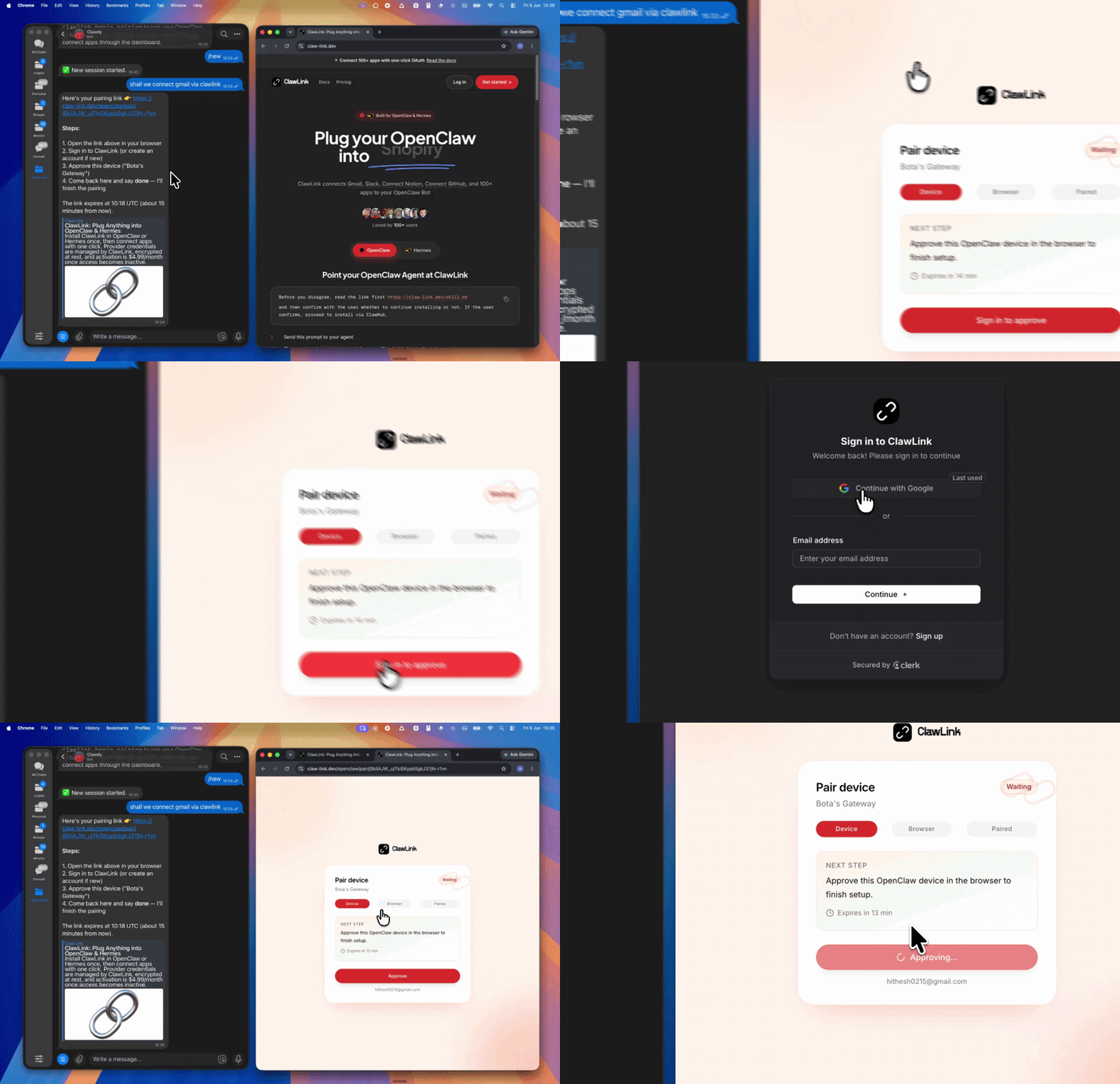 | App-specific connection GIF coming soon |
| Run the install command in OpenClaw | Sign in and approve the device | Open the dashboard and connect Google Calendar |
┌─────────────────┐     ┌──────────────┐     ┌──────────────────┐
│   OpenClaw      │────▶│   ClawLink   │────▶│ Google Calendar  │
│   (User Chat)   │     │   (OAuth)    │     │   API (REST)     │
└─────────────────┘     └──────────────┘     └──────────────────┘
         │                       │                       │
         │  1. Install Plugin    │                       │
         │  2. Pair Device       │                       │
         │  3. Connect Google Calendar                    │
         │                       │  4. Secure Token      │
         │                       │  5. Proxy Requests    │
         │                       │                       │
         ▼                       ▼                       ▼
   ┌──────────┐           ┌──────────┐           ┌──────────┐
   │  SKILL   │           │ Dashboard│           │ Calendar │
   │  File    │           │ Auth     │           │ Events   │
   └──────────┘           └──────────┘           └──────────┘
Install the verified ClawLink plugin from ClawHub. After the user confirms, complete the full setup so ClawLink tools are visible in the next OpenClaw chat.
openclaw plugins install clawhub:clawlink-plugin
openclaw config set tools.alsoAllow '["clawlink-plugin"]' --strict-json
openclaw gateway restart
Then tell the user: "OpenClaw has been restarted. Send /new as a standalone message to start a fresh chat, then ask for Google Calendar again."
# List calendars
clawlink_call_tool --tool "googlecalendar_list_calendars" --params '{}'

# Get current date/time for timezone-aware scheduling
clawlink_call_tool --tool "googlecalendar_get_current_date_time" --params '{"timezone": "America/New_York"}'

# List events for a specific day
clawlink_call_tool --tool "googlecalendar_events_list" --params '{"calendar_id": "primary", "time_min": "2025-01-15T00:00:00Z", "time_max": "2025-01-16T00:00:00Z"}'

# Find free time slots
clawlink_call_tool --tool "googlecalendar_find_free_slots" --params '{"time_min": "2025-01-15T09:00:00Z", "time_max": "2025-01-15T18:00:00Z", "calendar_ids": ["primary"], "meeting_duration_minutes": 60}'
All Google Calendar tool calls are authenticated automatically by ClawLink using the user's connected Google account.
No API key is required in chat. ClawLink stores the OAuth token securely and injects it into every Google Calendar API request on the user's behalf.
clawlink_begin_pairing if it is not configured yet.clawlink_list_integrations to verify the connection is active.clawlink_list_integrations
Response: Returns all connected integrations. Look for google-calendar in the list.
clawlink_list_tools --integration google-calendar
Response: Returns the live tool catalog for Google Calendar.
If Google Calendar tools are missing or the connection shows an error:
clawlink_list_integrations to verifyclawlink_list_tools --integration google-calendar| Tool | Description | Mode |
|---|---|---|
googlecalendar_list_calendars | List all calendars in the user's calendar list | Read |
googlecalendar_get_calendar | Get a specific calendar's metadata | Read |
googlecalendar_duplicate_calendar | Create a new empty calendar | Write |
googlecalendar_patch_calendar | Update calendar title, description, timezone | Write |
googlecalendar_calendars_delete | Delete a secondary calendar | Write |
googlecalendar_clear_calendar | Delete all events from a calendar | Write |
| Tool | Description | Mode |
|---|---|---|
googlecalendar_events_list | List events on a calendar with time filtering | Read |
googlecalendar_events_list_all_calendars | List events across all calendars | Read |
googlecalendar_events_get | Get a specific event by ID | Read |
googlecalendar_find_event | Search events by text query and time range | Read |
googlecalendar_create_event | Create a new calendar event | Write |
googlecalendar_update_event | Full update of an existing event | Write |
googlecalendar_patch_event | Partial update of event fields | Write |
googlecalendar_delete_event | Delete an event by ID | Write |
googlecalendar_events_move | Move an event to another calendar | Write |
googlecalendar_events_instances | Get instances of a recurring event | Read |
| Tool | Description | Mode |
|---|---|---|
googlecalendar_find_free_slots | Find free/busy time slots across calendars | Read |
googlecalendar_get_current_date_time | Get current date and time in a timezone | Read |
googlecalendar_quick_add | Parse natural language to create a simple event | Write |
| Tool | Description | Mode |
|---|---|---|
googlecalendar_remove_attendee | Remove an attendee from an event | Write |
| Tool | Description | Mode |
|---|---|---|
googlecalendar_freebusy_query | Get free/busy info for a list of calendars | Read |
| Tool | Description | Mode |
|---|---|---|
googlecalendar_acl_list | List access control rules for a calendar | Read |
googlecalendar_acl_insert | Create an ACL rule (share calendar) | Write |
googlecalendar_acl_delete | Delete an ACL rule | Write |
clawlink_call_tool --tool "googlecalendar_events_list" \
  --params '{
    "calendar_id": "primary",
    "time_min": "2025-01-15T00:00:00-05:00",
    "time_max": "2025-01-15T23:59:59-05:00",
    "single_events": true,
    "order_by": "startTime"
  }'
clawlink_call_tool --tool "googlecalendar_find_free_slots" \
  --params '{
    "time_min": "2025-01-15T09:00:00-05:00",
    "time_max": "2025-01-15T17:00:00-05:00",
    "calendar_ids": ["primary"],
    "meeting_duration_minutes": 60
  }'
clawlink_call_tool --tool "googlecalendar_create_event" \
  --params '{
    "calendar_id": "primary",
    "summary": "Team Sync",
    "description": "Weekly team synchronization meeting",
    "start_datetime": "2025-01-15T10:00:00",
    "event_duration_minutes": 60,
    "timezone": "America/New_York",
    "attendees": ["colleague@example.com"]
  }'
clawlink_call_tool --tool "googlecalendar_patch_event" \
  --params '{
    "calendar_id": "primary",
    "event_id": "abc123xyz",
    "summary": "Updated Team Sync",
    "start_datetime": "2025-01-15T11:00:00",
    "event_duration_minutes": 90
  }'
clawlink_list_integrations to confirm Google Calendar is connected.clawlink_list_tools --integration google-calendar to see the live catalog.clawlink_search_tools with a short query and integration google-calendar.┌─────────────────────────────────────────────────────────────┐
│ READ OPERATIONS (Safe) │
│ list → get → find → search → describe → call │
│ │
│ Example: List calendars → Find free slots → Show options │
└─────────────────────────────────────────────────────────────┘
│
▼
┌─────────────────────────────────────────────────────────────┐
│ WRITE OPERATIONS (Require Confirmation) │
│ list → get → describe → preview → confirm → call │
│ │
│ Example: Preview event creation → User confirms │
│ → Execute create │
└─────────────────────────────────────────────────────────────┘
clawlink_describe_tool first.whenToUse, askBefore, safeDefaults, examples, and followups to shape the call.clawlink_preview_tool first, then confirm with the user.clawlink_call_tool. Pass confirmation only after the preview matches the user's intent.America/New_York, Europe/London) not abbreviations.Z are interpreted in UTC regardless of calendar timezone — use timezone-offset timestamps for local date queries.calendar_id: "primary".find_free_slots to detect overlaps.| Status / Error | Meaning |
|---|---|
| Tool not found | The tool name does not exist in the current catalog. Verify with clawlink_list_tools --integration google-calendar. |
| Missing connection | Google Calendar is not connected. Direct the user to https://claw-link.dev/dashboard?add=google-calendar. |
404 Not Found | Calendar or event does not exist. Verify the calendar_id and event_id. |
403 Forbidden | Insufficient permissions to access or modify the calendar. |
400 Bad Request | Invalid datetime format or timezone. Use ISO 8601 with timezone offset. |
| Write rejected | User did not confirm a write action. Always confirm before executing event creates, updates, moves, or deletes. |
openclaw plugins list
/new as a standalone message to reload the catalog.openclaw config set tools.alsoAllow '["clawlink-plugin"]' --strict-json
openclaw gateway restart
/new again and retry.google-calendar.clawlink_describe_tool to verify parameter names and types before calling.clawlink_preview_tool first.Powered by ClawLink — an integration hub for OpenClaw